CHAPTER 8
D DAY
“As cold waters to a thirsty soul, so is good news from a far country.”
Proverbs

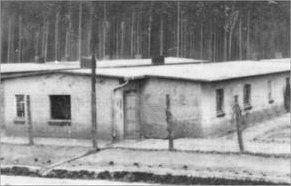 The accommodation in our Stalag consisted of seven army huts, which had
previously been used as barracks. Each contained eight rooms with ten
prisoners housed in each. Although not luxurious the rooms were not
uncomfortable. In each room one man was chosen as leader and it was his
responsibility to keep order. He in turn was responsible to the Sergeant
Major who was in charge of the whole camp. We had concert parties and each
Sunday we were allowed to hold church services which were all well attended.
The accommodation in our Stalag consisted of seven army huts, which had
previously been used as barracks. Each contained eight rooms with ten
prisoners housed in each. Although not luxurious the rooms were not
uncomfortable. In each room one man was chosen as leader and it was his
responsibility to keep order. He in turn was responsible to the Sergeant
Major who was in charge of the whole camp. We had concert parties and each
Sunday we were allowed to hold church services which were all well attended.The bartering system began to work very well and was put to very good use. It was astonishing the skill some of the lads acquired and before long parts had been smuggled into the camp. The construction of our secret radio could now begin in earnest. One of our main areas of concern was the lack of up to date and accurate news. We used to get snippets from the guards but we always new these were terribly biased. When the Germans suddenly began making searches we realised they had somehow got wind of what was going. This led to the construction of our secret room.
The branches were being used to line the walls of the tunnel and proved very effective. The next move was to construct a second radio set and the better of the two installed in the tunnel. under the original room. A torch was somehow obtained and although very weak it did the job. The tunnel was about seven feet long and only about two feet in diameter. At regular intervals one of the camp committee would report the sergeant major for his instructions as regards his “special” duties. He would then report to room seven and worm his way down the tunnel. Lying at full length he would listen to the news, writing down the details by the light of the torch. The news would be presented to the Sergeant Major. The whole operation was carried out with the utmost secrecy and security and a strict silence maintained. Then came the day we had all expected but dreaded non-the less. It was a Sunday and we were suddenly informed that the church service had been cancelled. Then we heard the tramp of marching feet and the guttural voice of a German barking out orders. Our regular guards then came and told us put on warm clothing – it was bitterly cold outside. We were ordered outside and told to stand in line by our room in groups of ten. This was not unusual since we had been subject to these surprise roll calls on many occasions. What was unusual was the number of German soldiers lined up outside the gates. The gates were opened and in they marched. They were split up and groups allocated to each room. They even included the Church and the theatre. For the next two hours we stood there shivering in the bitter cold. Suddenly the commander was sent for and he marched into room seven. He emerged some minutes later triumphantly clutching one of our radio sets. We were all herded together with our CO looking suitably crestfallen as he was ushered forward between two guards and was severely admonished. We were left in no doubt as to what happen should this sort of thing occur again.
 The Germans dispersed and as soon as it was safe a committee meeting was
held. Our Sergeant Major was not crestfallen now, in fact, he was positively
elated as he informed us the Germans had commandeered the dummy radio and
the real thing was still in place.
The Germans dispersed and as soon as it was safe a committee meeting was
held. Our Sergeant Major was not crestfallen now, in fact, he was positively
elated as he informed us the Germans had commandeered the dummy radio and
the real thing was still in place.Our room leader informed me that the next day would be my day off. I duly went along and got my name on the sick list by using the usual method. This entailed seeing the doctor who could excuse us work if we were sick. At that time I had developed a series of small swellings on my body, which the doctor reckoned had been caused by malnutrition. He told me that the “suet” ducts had become blocked and the lumps were lumps of “suet” blocked in the wrong places. I was told to report if any of the lumps started to give discomfort and one lump, which appeared between my ribs, began to do just that. The only solution was to grit my teeth and watch as the offending lump was cut out – no anaesthetic for me. I remember looking at the removed lump and thinking that it did look just like a lump of suet.
Although it was officially a day off I was to report to the Sergeant Major in room seven at 5am. I was duly handed the torch, a notebook and pencil and crawled off into the tunnel. The set was at the far end of the tunnel so it meant lying full length. A piece of red paper had been pasted around the torch to minimise the glare meaning that it was only a dim light and making notes was extremely difficult. I had been listening for some time when suddenly the programme was interrupted by a news flash. Then came the sensational news and I had the privilege of hearing it. Firstly, the calm BBC voice stated that the news was being broadcast using a new method. I could literally feel my blood tingling as it was announced the invasion of Normandy had begun. Thousands of allied troops were being landed, backed by planes and ships and in particular special landing craft. The announcer stated that the landings were going according to plan and a bridgehead had been established. Further bulletins would follow. I shall never forget lying there taking down this fantastic news.
I walked calmly from the tunnel area as I had been trained to do. I sat down down and wrote out the report but I was in such a state that my writing was almost eligible. The Sergeant Major seemed to realise from my demeanour that something had happened but he waited until the camp had settled down before he sent for me. I just stood there and blurted out the news. He seemed somewhat taken aback and a little sceptical at first, at least until he looked at my notes and then he was convinced. I was annoyed when my notes were confiscated but I accepted the reason that secrecy must be observed at all times. During the rest of the day I made several excursions back into the tunnel for updated news. When our lads returned to the huts from their work duties they told us that Germans had informed them that a raid on the northern coast of France had been repulsed with heavy losses. However, one of my room mates, named Bob, told me that the boss at the works Herr Ulrick, who was definitely anti Nazi, had told him it was all lies and the landings were succeeding. Germany he had said was “kaput” and he could not wait to get home to his family. We saw the dejection set in with the Germans; suddenly they were all more respectful. Every day our little radio brought more news of allied advances.
It was the beginning of the end.
Many years have passed since that fateful day. I am now going grey, slower on my feet and the years have taken their toll. My brain is still as active as ever and any mention of D Day and my mind flashes back to that day when hope replaced despair and an end to captivity became a reality.